Skip to the content
When it comes to warehouse safety, a few usual suspects tend to get the most attention. Forklifts. Stock. Pedestrians. Processes. But what about the infrastructure at the centre of all the activity?
Your racking system is likely one of the biggest investments in your warehouse. And while it might not move, beep, scan or ship, it works 24/7 supporting heavy loads and constant traffic, and taking its fair share of knocks along the way.
That’s why warehouse safety isn’t just about protecting people and products, it’s about protecting the infrastructure too. At Rapid Racking, we believe racking safety is built on three essentials: protection, inspection and standards. This guide explores how protection products can help prevent costly damage; why regular inspections are key to spotting issues before they become problems; and how recognised standards underpin safe, smooth and compliant warehouse performance.
“It’s only a bump”
In a fast-paced storage operation, it’s not a question of if your racking will get knocked, it’s when. Even the most experienced forklift operator misjudges a turn now and then, or clips an upright when manoeuvring through a busy aisle.
It’s easy to assume everything’s fine because nothing looks broken. But those little knocks and scrapes can add up to bigger issues over time. What may have felt like a minor bump could have weakened a critical load-bearing component. Repeated light impact, especially in the same area, compromises the integrity of your entire racking system, risking not just your stock but your whole operation.
Protect it before it needs protecting
The best time to fit protection is before your racking goes into service. But it’s never too late to install or improve protection on racking that’s already up and running.
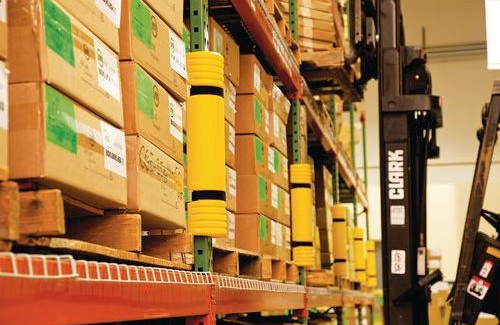
A well-placed frame protector or corner guard will absorb a hit so your racking doesn’t have to. If a protector gets damaged and needs replacing it means a) it’s done its job, and b) it’s a quick, easy task and a whole lot cheaper than dealing with racking repairs or replacement – or worse still, accident or injury.

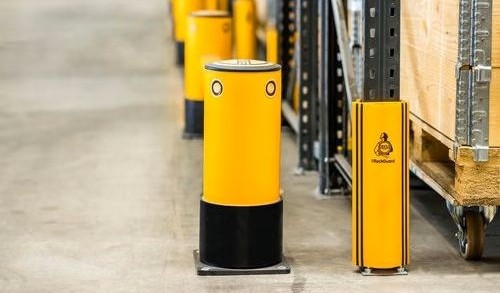
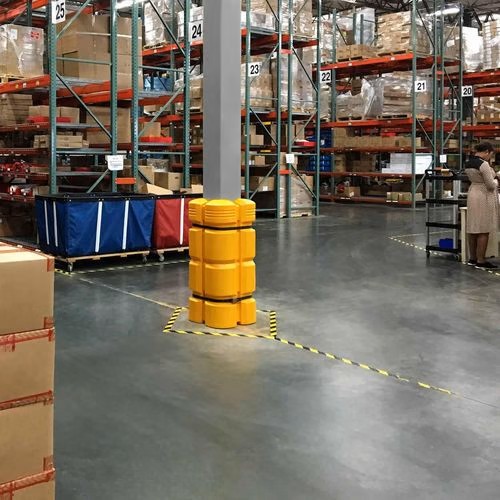
Think about the areas where the action never stops: busy forklift routes, tight turns, aisle ends, loading bays and other high-traffic zones. These are the places most likely to take a knock. At Rapid, we recognise all these warehouse risks and provide high-visibility protection to tackle them head-on.
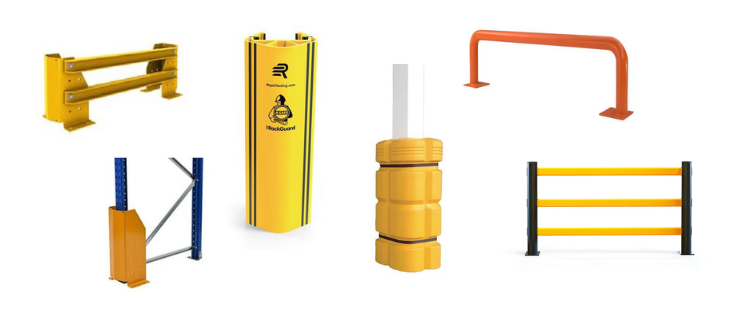
Types of racking protection at Rapid:
- Upright protectors – tough bumpers that shield vulnerable rack uprights from everyday impacts
- Post protectors – floor-mounted guards to absorb knocks where they’re most likely to happen
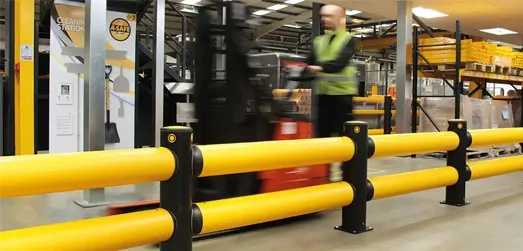
- End-of-run protection – configurable posts and rails that protect the entire end of your racking aisle
- Column guards – wraparound protection keeping your building’s structural columns safe
- Bollards and barriers – freestanding to guide pedestrians and vehicles, and protect infrastructure
If a protector gets damaged and needs replacing it means a) it’s done its job, and b) it’s a quick, easy task and a whole lot cheaper than dealing with racking repairs.
Sign up for safety
Signs, labels and notices play an equally important role in keeping your racking standing strong and your operation moving safely. They work alongside your protection products to avoid overloaded racking, disorganised layouts and poor visibility.
Aisle markers and location labels – adhesive or magnetic, a well-positioned sign or label keeps stock tidy and easy to find, speeding up the picking process and reducing unnecessary movement.
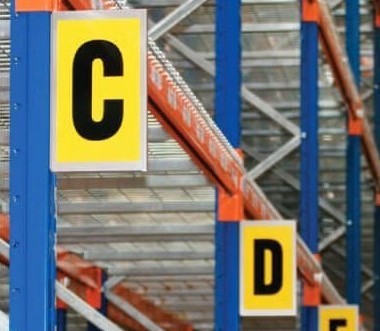
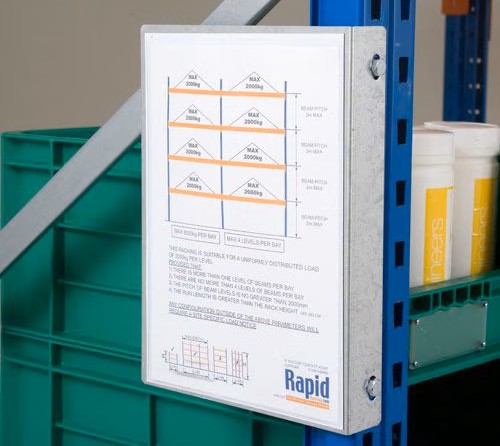
Weight load notices – displaying the maximum load capacity each level can handle is a must for racking and shelving, removing guesswork and making sure your system gets used correctly.
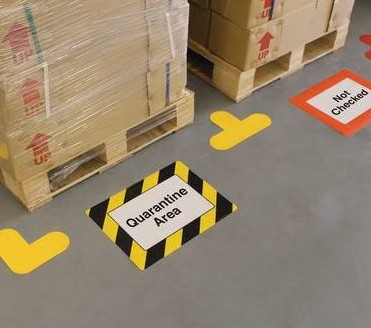
Clearly marked walkways, zones and navigation routes – keep pedestrians and vehicles safely separated and forklift operators on track… fewer wrong turns, less manouevring.
Inspections – keeping safety in check
You test your fire systems regularly. You service your fleet. You make all your machinery checks. Your racking system deserves the same proactive attention. Most rack-related incidents don’t stem from dramatic failures, they arise from small issues that are easy to miss day to day but will get quickly picked up in an inspection.
What does a rack inspection cover?
The inspection process will find any hidden damage, highlight potential risks and identify small issues before they have the chance to become big ones. This might include:
- damaged uprights or bent beams
- missing beam connectors and safety pins
- overloaded bays or missing load notices
- signs of impact damage or poor repairs
- defective column guards or barriers
How often should racking be inspected?
Racking safety is an ongoing job which works best when inspections happen at three levels:
1. Spot it, report it – whether they’ve knocked the racking themselves or simply noticed something doesn’t look right, everyone in the team should know to report any racking damage immediately.
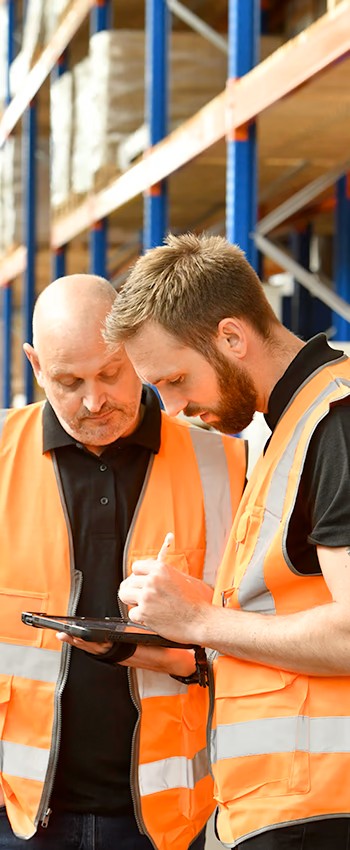
2. Weekly checks – in-house checks should be carried out every week by your designated Person Responsible for Racking Safety (PRRS). These checks should be formally recorded, and any issues flagged.
3. Annual inspection – a full review must be carried out every 12 months by a qualified rack inspector who’ll provide you with a detailed report highlighting risk levels and any recommended actions.
How much does an annual inspection cost?
For a medium-sized installation, a professional rack inspection will set you back around £500 – far less than the cost of replacing damaged racking. At Rapid, we’ll arrange an inspection for you, carried out by a SEMA-approved rack inspector (SARI) so you have peace of mind that your storage system is being assessed to industry standards.
Are you up to standard?
Whether you’re kitting out a brand new warehouse or reviewing an existing storage facility, you’ll likely have questions. What protection do you need? Can you have too much? Does empty racking still need inspecting? What does good look like? You’ll find all your answers in the industry standards and regulations.
Racking may seem a relatively simple structure but there are strict rules governing its installation, use and maintenance:
- BS EN 15635, the benchmark for the safe use and maintenance of steel static storage systems, outlining responsibilities for inspection, damage reporting, repairs and ongoing rack safety management.
- Provision and Use of Work Equipment Regulations 1998 (PUWER), requiring employers to ensure work equipment, including racking, is fit for purpose, maintained and inspected regularly. They also require employees to receive appropriate information and training on using it safely.
Guidance from the Health and Safety Executive (HSE) and the Storage Equipment Manufacturers’ Association (SEMA) complement these regulations with best practice on managing storage safety. For example, the HSE recommends racking is inspected annually by a SEMA-approved rack inspector (SARI), an independent assessment that supports compliance with the expectations set out in PUWER.
If an HSE inspector visits your site and finds damaged racking and/or no inspection regime, this could be viewed as failure to adequately manage workplace risk under the Health and Safety at Work etc. Act 1974 and related regulations.
Small impacts, big consequences
Unsafe racking, damage to goods, operational downtime, expensive repairs: all consequences of what might seem at the time an insignificant impact. Whether it’s a distribution centre or a stockroom, keeping your storage system protected, inspected and maintained won’t just keep your compliance manager happy, it’ll protect your people, your products and your bottom line.
Need some help?
If you know your setup could do with a once-over but you’re unsure where to begin, let us take a look. From racking protection and labelling to SEMA-approved inspections, we’ll help you put robust safety measures and processes in place based on your equipment, layout and traffic levels.
Call us today on 08000 147 444 or email design@rapidracking.com